Нарукавный знак 425 транспортной бригады СВ США 

Description
On a brick red disc with a 1/8 inch (.32 cm) golden yellow border 2 1/4 inches (5.72 cm) in diameter overall, a central yellow circular band conjoined with four yellow diagonal bands saltirewise throughout bearing eight black billets saltirewise.
Symbolism
Brick red and golden yellow are colors used for Transportation. The yellow rim with diagonal bands joined by a ring in the center simulates a steering wheel and refers to the motor transport mission of the organization. The yellow intersecting bands are also indicative of highways. Together with the black rectangles which denote the movement of cargo and personnel by highway transport it depicts the Brigade’s coordination and control of highway transportation with special reference to continuous intersectional and other line haul operations.
Background
The shoulder sleeve insignia was originally approved for the 425th Transportation Command on 8 May 1967. It was redesignated for the 425th Transportation Brigade on 25 February 1972. (TIOH Drawing Number A-1-453)

Нарукавный знак 336 транспортного командования СВ США

Description
On a shield-shaped embroidered item blazoned as follows: Per bend Or and Azure, five stylized arrows in bend sinister Gules (Brick Red), in base thirteen (13) mullets in bend, seven and six, Argent; all with a 1/8 inch (.32 cm) yellow border. Overall dimensions are 2 11/16 inches (6.83 cm) in width and 3 1/8 inches (7.94 cm) in length.
Symbolism
The shield denotes guardianship, indicating the protection needed to accomplish each mission. Brick red and golden yellow are the colors traditionally associated with Transportation units. The arrows allude to the tradition of the red ball express from World War II. Dark red symbolizes the blood shed of those that sacrificed their lives for the cause, mission and country, for which they fought. The stars represent the original 13 colonies of the United States.
Background
The shoulder sleeve insignia was approved on 7 June 2007. (TIOH Drawing Number A-1-928)
Нарукавный знак 319 транспортного командования СВ США

Description
On a triparted shield of three colors: the top white, the right side green, and the left side blue; with a 1/8 inch (.32 cm) yellow border, 2 7/8 inches (7.30 cm) in width and 3 inches (7.62 cm) in height overall, a golden yellow wheel with five golden yellow spokes on a brick red background.
Symbolism
The colors blue, green and white represent sea, land and air, the environment in which transportation units function. The colors meet at the wheel which indicates the composite mission of the Brigade. The wheel represents the continuity of the 319th over the years, it also represents movement and thus refers to the 319th’s motto “ACCENT ON ACTION.” The shield is the same shape as the shield in the Transportation Corps branch insignia. Brick red and golden yellow are the colors of the Transportation Corps.
Background
The shoulder sleeve insignia was approved on 22 January 1985. It was amended to include the dimensions of the insignia on 19 February 1985. (TIOH Drawing Number A-1-702)

Нарукавный знак 184 транспортного командования СВ США


Нарукавный знак 143 транспортного командования СВ США


Нарукавный знак 125 транспортного командования СВ США

Description
An upright rectangle 2 inches (5.08 cm) in width and 3 inches (7.62 cm) in height arched at base and having within a 1/8 inch (.32 cm) yellow border a brick red field charged with a blue anchor surmounted with a yellow wheel.
Symbolism
Brick red and yellow are the colors used for Transportation. The wheel symbolizes the basic aspects of movement and with the anchor refers to the organization’s mission in support of amphibious operations.
Background
The shoulder sleeve insignia was approved on 7 June 1967. (TIOH Drawing Number A-1-456)
Нарукавный знак 124 транспортного командования СВ США

Description
On a brick red shield 2 inches (5.08 cm) in width overall a yellow wheel between two wings, all within a 1/8 inch (.32 cm) yellow border.
Symbolism
Brick red and yellow are the colors used for Transportation. The winged wheel symbolizes two of the roles of Transportation – air and rail movement.
Background
The shoulder sleeve insignia was approved on 1 June 1967. (TIOH Drawing Number A-1-454)
Нарукавный знак 107 транспортного командования СВ США

Нарукавный знак 37 транспортной группы СВ США

Description
On a brick red vertical rectangle arched convexly at the top and bottom, divided in half horizontally edged with a 1/8 inch (.32 cm) golden yellow border consisting of a black arrow issuing from base surmounted with seven golden yellow dashes, two, two, two and one, diminishing towards the point of arrow, all below a sunburst emitting four golden yellow rays. The overall dimension is 2 inches (5.08 cm) in width and 3 inches (7.62 cm) in length.
Symbolism
Brick red and golden yellow are the colors traditionally used by the Transportation Corps. The arrow symbolizes the corps being the “spearhead of logistics.” The dashes on the black arrow suggest a roadway and the German autobahn, also the unit’s long history supporting operations throughout Europe. It also alludes to the multi-faceted methods the 37th Transportation Group uses to support the war fighter. The sunburst denotes the center of command from which all strength is derived. The four rays signify the World War II campaigns in which the Group participated: Naples-Foggia, Rome-Arno, North Apennines and Po Valley.
Background
The shoulder sleeve insignia was approved on 23 December 2005. (TIOH Drawing Number A-1-880)
Нарукавный знак 32 транспортного командования СВ США

Нарукавный знак 11 транспортного командования СВ США

Description
On a shield 2 1/4 inches (5.72 cm) in width overall divided horizontally into thirds, the lower two-thirds brick red bearing a yellow wheel and the upper third white crossed horizontally by a blue wavy bar and all surmounted by two brick red vertical bars all within a 1/8 inch (.32 cm) yellow border.
Symbolism
The colors brick red and yellow (gold) are used for the Transportation Corps. The wheel, a basic implement of mobility, and the white and wavy blue area, symbolic of water, refer to the terminal port function of the organization. The two white and the one blue areas also allude to the three activations of the unit (initially in the United States and subsequently in Korea and France), and the two vertical bars simulating wharves and docks also simulate the numeral “11,” the organization’s numerical designation.
Background
The shoulder sleeve insignia was approved on 14 January 1969. (TIOH Drawing Number A-1-513)
Нарукавный знак 5 транспортного командования СВ США

Description
A round bottom shield 2 inches (5.08 cm) in width and 2 1/2 inches (6.35 cm) in height having within a 1/8 inch (.32 cm) yellow border upon a field of brick red a yellow wedge extending from top to bottom with a yellow disc centered on and over it, that portion of the disc on the wedge in brick red and charged in center with a yellow five-pointed star.
Symbolism
Yellow and brick red are the colors traditionally associated with the Transportation Corps. The wedge or V-shape indicates the numerical designation of the Command. The disc represents the wheel, a symbol basic to transportation and the star at its hub represents the command function.
Background
The shoulder sleeve insignia was approved on 6 April 1967. (TIOH Drawing Number A-1-449)
Нарукавный знак 3 транспортного командования СВ США

Description
On a brick red disc 2 inches (5.08 cm) in diameter, a golden yellow segment of a railway track  consisting of two vertical rails on three horizontal crossties, the central crosstie surmounted by a white star, all within a 1/8 inch (.32 cm) golden yellow border.
Symbolism
Brick red and golden yellow are the colors used for the Transportation Corps. The segment of railway track symbolizes the unit’s former mission, and the three ties allude to its numerical designation. The star is symbolic of the command.
Background
The shoulder sleeve insignia was originally approved for the 3d Transportation Command on 23 October 1969. It was redesignated for the 3d Transportation Brigade on 6 September 1972. The insignia was redesignated for the 3d Transportation Agency effective 16 September 1994, with the description and symbolism revised. It was redesignated effective 17 September 2004, for the 3d Transportation Command. (TIOH Drawing Number A-1-526)

Нарукавный знак 2 транспортного командования СВ США

4 Transportation Command Patch. US Army

Shoulder Sleeve Insignia
Description
On a brick red shield 2 inches (5.08 cm) in width and 2 inches (5.08 cm) in height overall and within a 1/8 inch (.32 cm) yellow border a yellow annulet and trident interlaced.
Symbolism
Brick red and yellow are the colors used for Transportation. The wheel, a symbol for movement and the trident, an attribute of Poseidon (God of the Sea in Greek mythology) allude to the mission of the organization in the movement of vital cargo across land and waterway.
Background
The shoulder sleeve insignia was originally approved for the 4th Transportation Command on 28 June 1967. It was redesignated for the 4th Transportation Brigade on 13 May 1975. The insignia was redesignated effective 16 February 1981, for the 4th Transportation Command. (TIOH Drawing Number A-1-461)

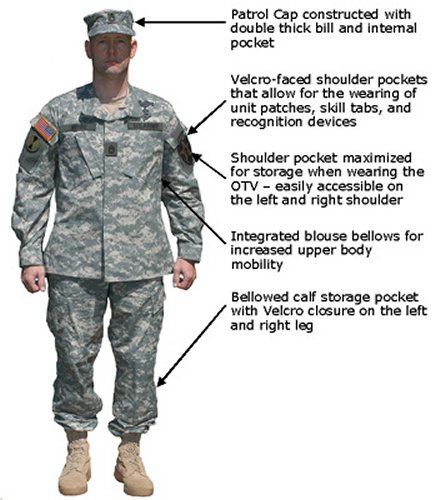 Форма ACU или Army Combat Uniform это современное обмундирование армии США , которое было принято на вооружение в 2004 году. Данный камуфляж
имеет ряд преимуществ, которые делают его одним из самых популярных видов обмундирования среди любителей страйкбола. Во-первых, форма ACU имеет очень удобный и хорошо продуманный покрой, который включает в себя несколько косых карманов, а также липучки на руках. Во-вторых, ставшая модной в последние годы так называемая пиксельная
Форма ACU или Army Combat Uniform это современное обмундирование армии США , которое было принято на вооружение в 2004 году. Данный камуфляж
имеет ряд преимуществ, которые делают его одним из самых популярных видов обмундирования среди любителей страйкбола. Во-первых, форма ACU имеет очень удобный и хорошо продуманный покрой, который включает в себя несколько косых карманов, а также липучки на руках. Во-вторых, ставшая модной в последние годы так называемая пиксельная  Знаки различия армии конфедератов офицерский состав
Генерал
На кителе генерала четырехрядный галун и два ряда по четыре пары пуговиц.
Информация Функен Л. и Ф. Энциклопедия вооружений и военного костюма. Войны на американском континенте XVII-XIX веков
Полковник
Знаки различия армии конфедератов офицерский состав
Генерал
На кителе генерала четырехрядный галун и два ряда по четыре пары пуговиц.
Информация Функен Л. и Ф. Энциклопедия вооружений и военного костюма. Войны на американском континенте XVII-XIX веков
Полковник
 Знаки различия армии федералов офицерский состав
a
Генерал-лейтенант
b
Генерал-майор
На генеральском мундире два ряда пуговиц, которые расположены тремя группами по три пуговицы .
Офицерский шарф изготовлялся из шелка светло-желтого цвета. Представленная здесь шпага была единой для всех генералов.
Знаки различия армии федералов офицерский состав
a
Генерал-лейтенант
b
Генерал-майор
На генеральском мундире два ряда пуговиц, которые расположены тремя группами по три пуговицы .
Офицерский шарф изготовлялся из шелка светло-желтого цвета. Представленная здесь шпага была единой для всех генералов.  Униформа 99 отдельного пехотного батальона Викинги армии США
99 отдельный пехотный батальон Викинги был создан в Кэмп Рипли, штат Миннесота 19 июля 1942 года приказом по военному ведомству. Это уникальное элитное подразделение должно было состоять только из норвежцев и американцев норвежского происхождения.
Солдаты, которые выбрались для этого подразделения, должны были владеть норвежским языком и, предпочтительно, уметь передвигаться на лыжах.
По штатному расписанию
Униформа 99 отдельного пехотного батальона Викинги армии США
99 отдельный пехотный батальон Викинги был создан в Кэмп Рипли, штат Миннесота 19 июля 1942 года приказом по военному ведомству. Это уникальное элитное подразделение должно было состоять только из норвежцев и американцев норвежского происхождения.
Солдаты, которые выбрались для этого подразделения, должны были владеть норвежским языком и, предпочтительно, уметь передвигаться на лыжах.
По штатному расписанию  Война во Вьетнаме стала войной пехоты. Американская пехота действовала повсюду, oт лесистых гор до заболоченных речных долин. В боевых действиях принимал участие 81 пехотный батальон разного типа.
Сотни тысяч американских парней прошли через Вьетнам именно в составе пехотных частей. Солдаты воинской специальности IIВ I боевые действия , I пехота, В легкая пехота вынесли основную тяжесть Вьетнамской войны.
Не все пехотинцы лазали по джунглям, по крайней мере, не всегда. Многие
Война во Вьетнаме стала войной пехоты. Американская пехота действовала повсюду, oт лесистых гор до заболоченных речных долин. В боевых действиях принимал участие 81 пехотный батальон разного типа.
Сотни тысяч американских парней прошли через Вьетнам именно в составе пехотных частей. Солдаты воинской специальности IIВ I боевые действия , I пехота, В легкая пехота вынесли основную тяжесть Вьетнамской войны.
Не все пехотинцы лазали по джунглям, по крайней мере, не всегда. Многие  На капитане тропическая униформа хаки Tropical Khakl , сверху которой одета куртка N4 Field Jackot образца 1943-45 годов.
Информация L US NAVY dans la crise de Cuba octobre-novembre 1962
Мастер-главный старшина в едином рабочем хаки Khaki Working с галстуком.
Куртка подводника имеет два нагрудных кармана с клапанами.
На капитане тропическая униформа хаки Tropical Khakl , сверху которой одета куртка N4 Field Jackot образца 1943-45 годов.
Информация L US NAVY dans la crise de Cuba octobre-novembre 1962
Мастер-главный старшина в едином рабочем хаки Khaki Working с галстуком.
Куртка подводника имеет два нагрудных кармана с клапанами.
 Рядовой 1942 Рядовой 29-я пехотной дивизия декабрь 1942 г., восток Англии Этот солдат армии США одет в обмундирование класса А с шинелью цвета хаки . Его брюки из того же материала собраны в полотняные гетры на ногах у солдата коричневые кожаные ботинки по щиколотку, поверх которых надеты резиновые боты. Головной убор пилотка с голубым кантом. Эта одежда была типичной для американских
  Рядовой 1944 Рядовой 101-я воздушно-десантная дивизия ноябрь 1944 г., Бельгия К началу последней военной зимы американские войска получили представленное на иллюстрации обмундирование образца 1943 г., в которое входила однобортная полевая куртка с четырьмя накладными карманами. Куртка была сшита из водоотталкивающего и ветрозащитного хлопчатобумажного материала и имела отстегивающуюся подкладку из ворсистой ткани.
  Рядовой 1941 Морской пехотинец 1-й батальон береговой обороны декабрь 1941 г., остров Уэйк Военнослужащий одет в типичную форму американской морской пехоты раннего этапа войны на Тихом океане, состоявшую из гимнастерки и брюк цвета хаки , парусиновых гетр и коричневых кожаных ботинок. На голове у солдата каска образца 1917 г., относящаяся к периоду Первой мировой войны он вооружен винтовкой образца 1903 г. 30-го калибра с примкнутым
 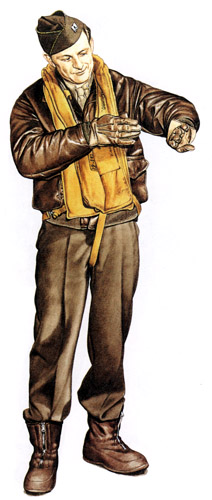 Техник-сержант 2-го класса 1945 Техник-сержант 2-го класса ВВС 1945 Этот представитель наземного персонала в рабочем обмундировании комбинезон поверх пуловера на голове кепи-бейсболка. Знаки различия нашиты на рукавах. Наземный персонал осуществлял жизненно важные работы по поддержанию самолета в пригодном для полетов состоянии. Все авиационные части были организованы практически одинаково, хотя климатические и географические
  Старшина 1-го класса 1942 Старшина 1-го класса ВМС 1942 Этот старшина одет в форменку повседневное обмундирование для матросов и младших старшин. В холодную погоду эта категория военнослужащих надевала также длинные или короткие бушлаты с двумя рядами крупных пластмассовых пуговиц с американским орлом. На голове военнослужащего головной убор рабочей формы одежды, заменивший непопулярное кепи Дональд Дак , названное
  Капрал военной полиции 1942 Капрал Военная полиция декабрь 1942 г. Лондон В армии США обмундирование цвета хаки появилось в 1903 г. в качестве тропической формы одежды. В стандартную солдатскую форму образца 1941 г. входил оливково-серый хаки однобортный китель с открытым воротником, погонами того же цвета, нагрудными накладными карманами с застегивавшимися на золотистые пуговицы
  Фронтовик
Ефрейтор 1 в униформе образца 1943 г. Знаки различия из петлиц перенесены на погоны . Каска СШ-40 получила широкое распространение с 1942 г. Примерно в то же время в войска в массовых количествах начали поступать пистолеты-пулеметы. Этот ефрейтор вооружен 7,62-мм пистолетом-пулеметом Шпагина - ППШ-41- с 71-зарядным барабанным магазином. Запасные магазины в подсумках на поясном ремне рядом с подсумком на три ручные гранаты. В 1944 г. наряду с барабанным
Фронтовик
Ефрейтор 1 в униформе образца 1943 г. Знаки различия из петлиц перенесены на погоны . Каска СШ-40 получила широкое распространение с 1942 г. Примерно в то же время в войска в массовых количествах начали поступать пистолеты-пулеметы. Этот ефрейтор вооружен 7,62-мм пистолетом-пулеметом Шпагина - ППШ-41- с 71-зарядным барабанным магазином. Запасные магазины в подсумках на поясном ремне рядом с подсумком на три ручные гранаты. В 1944 г. наряду с барабанным